

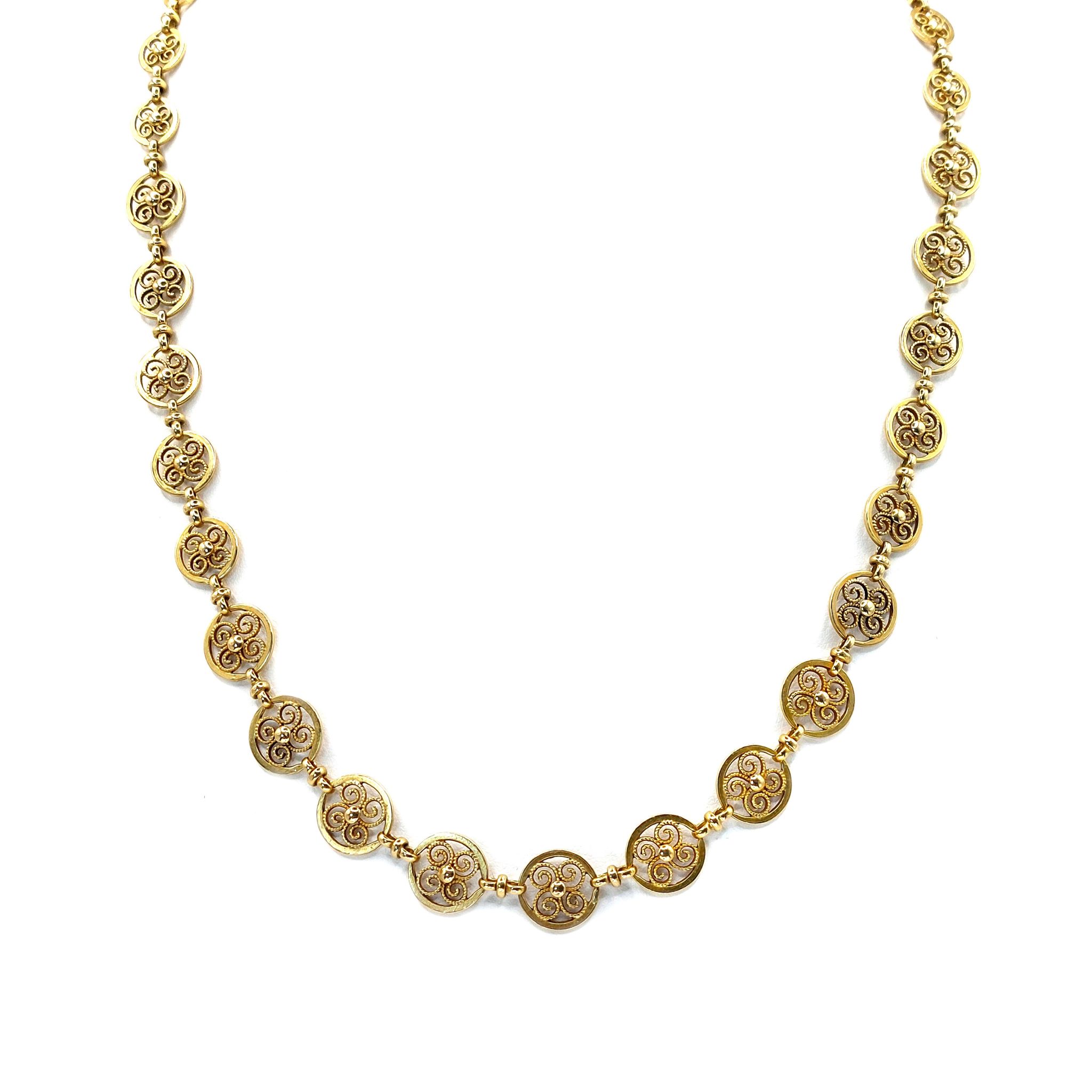
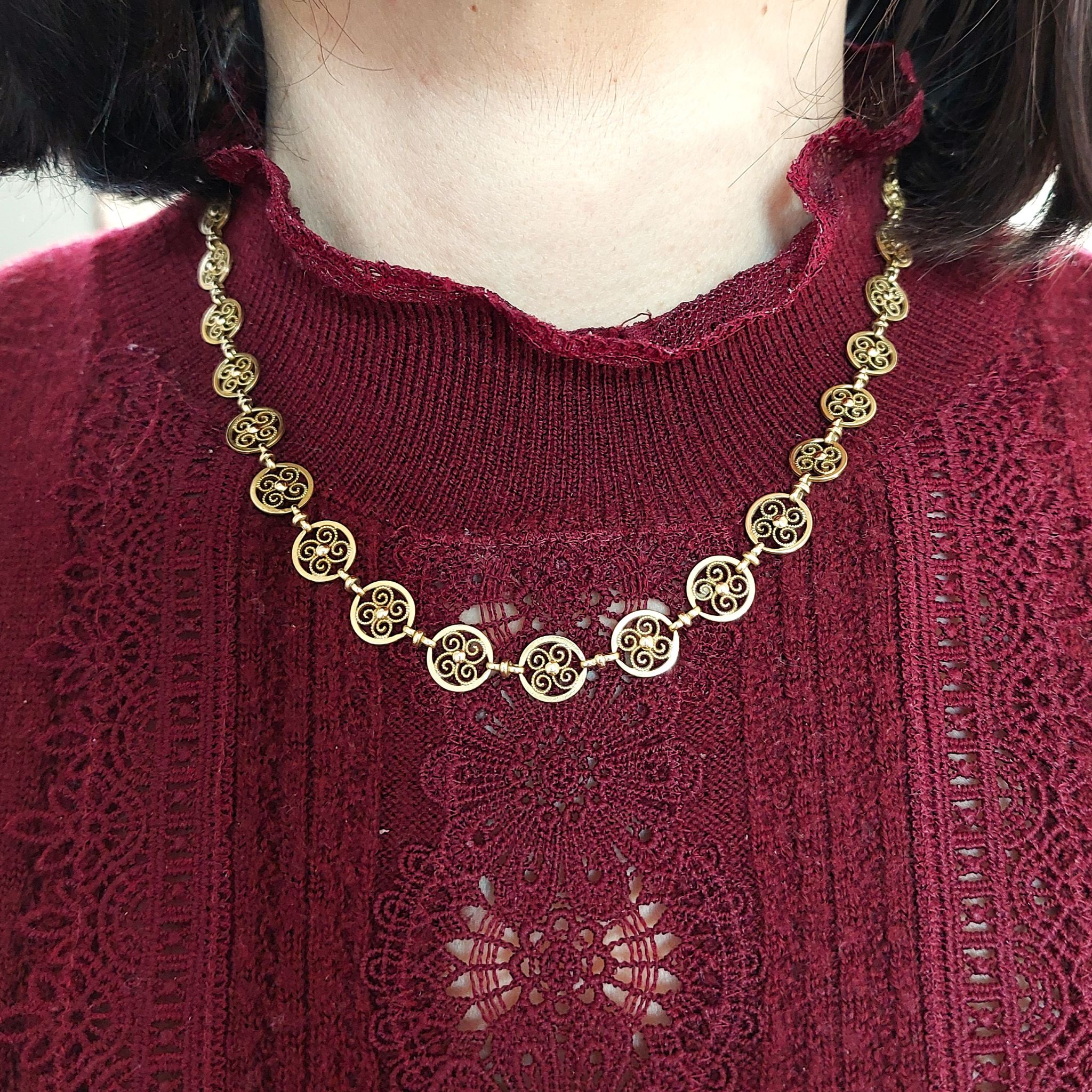
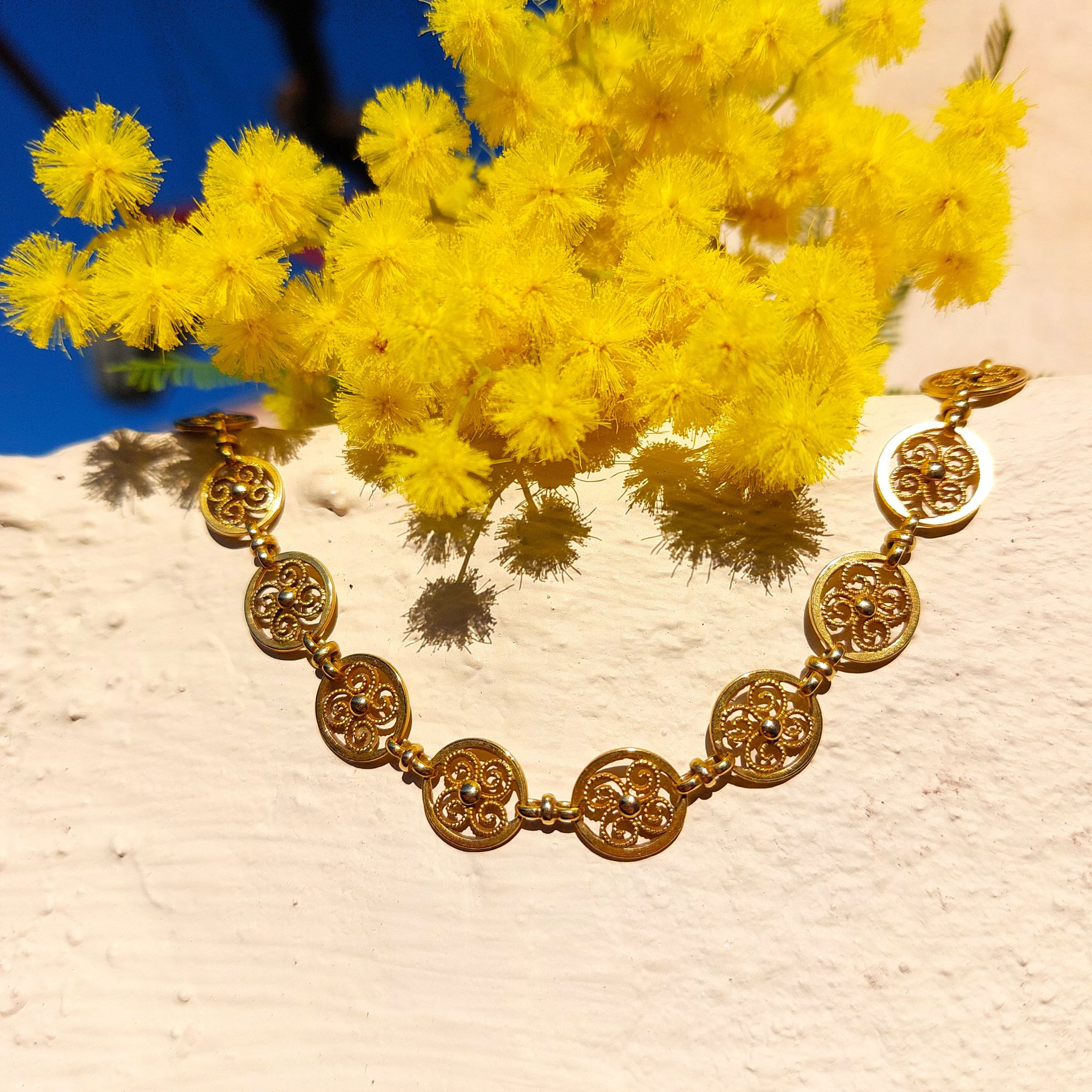
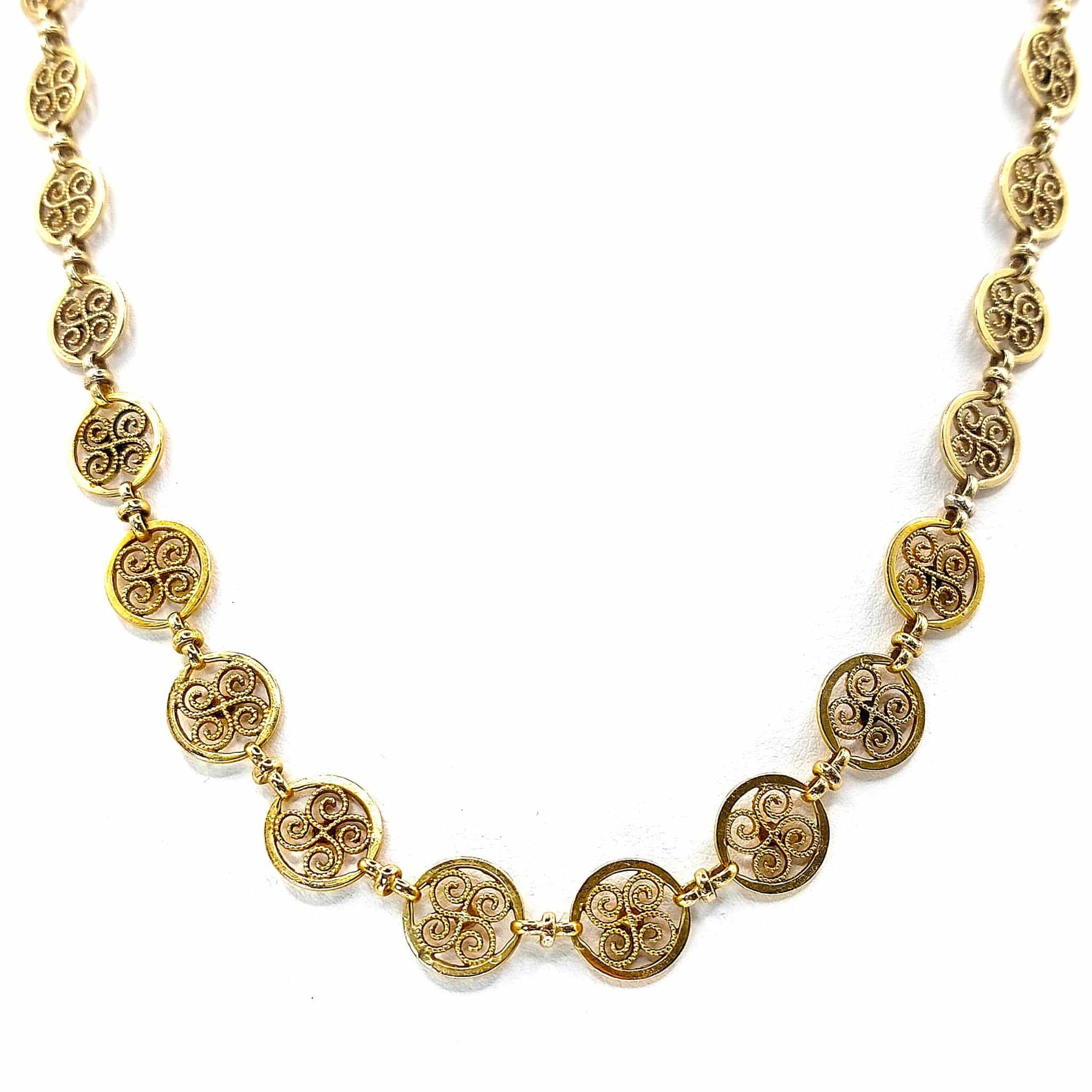
Ancien collier « à la Grecque » – or 18k
3200,00 € & Livraison Gratuite en France
Authenticité & Garantie
- Pièce unique, sélectionnée par la Maison ACDLR
- Bijou authentifié et expertisé par nos soins
- Paiement sécurisé par virement, CB, Paypal (possibilité en plusieurs fois)
- Certificat d’authenticité fourni
- Livraison sécurisée et assurée, gratuite vers la France, la Belgique et Monaco
Ancien collier « à la Grecque » – or 18k
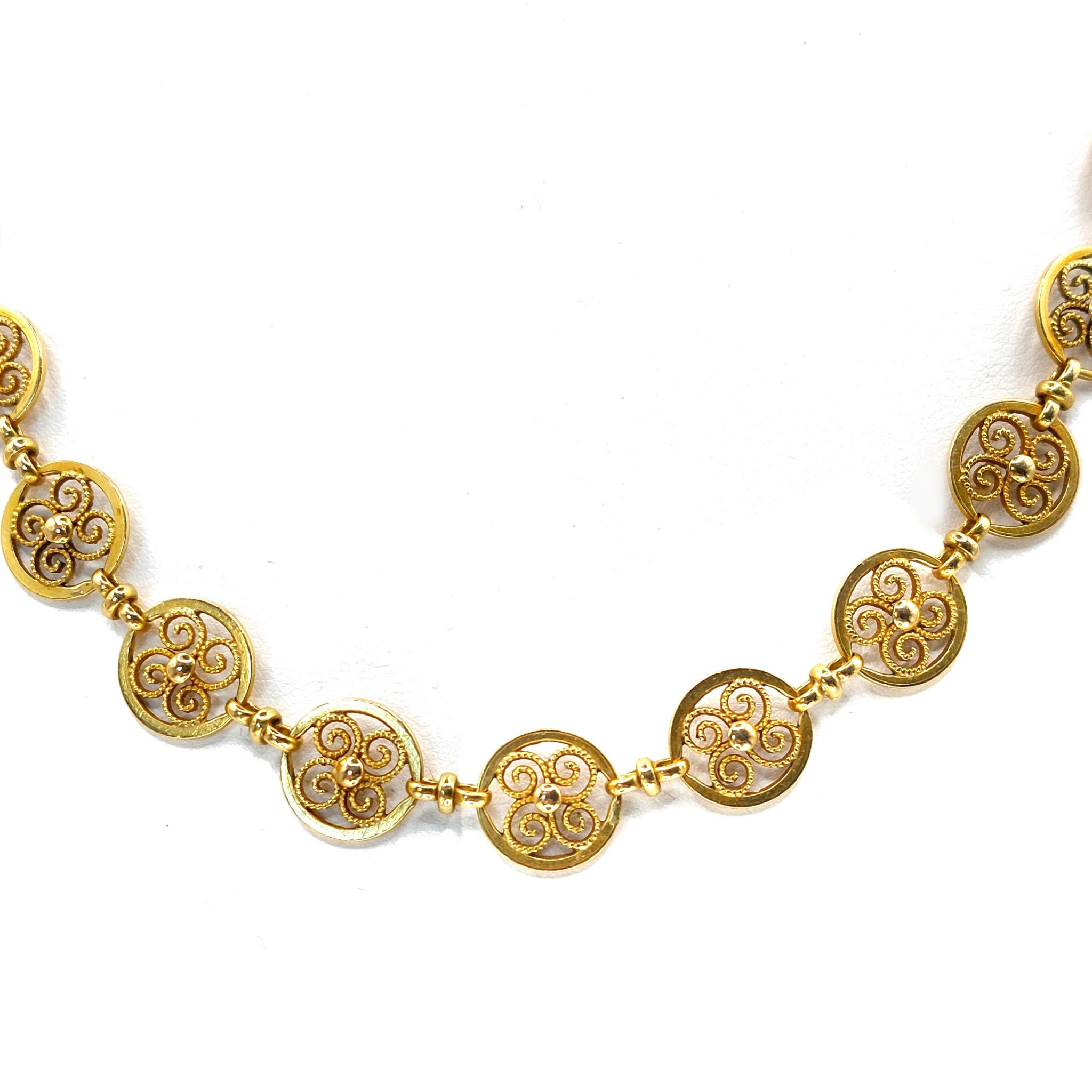
Ancien collier en or jaune 18k, à décor d’une suite en chute de cercles d’or centrés d’enroulements stylisés en filigrane.
Travail français.
Fin XIXème siècle.
Caractéristiques :
Longueur : 43,5 cm environ.
Diamètres des cercles d’or : de 7,3 mm à 10 mm.
Fermoir anneau ressort.
Poids : 20 g (or 18k – 750/1000 – têtes d’aigle).
Etat :
Ce collier en filigrane d’or est en bon état général.
Histoire et Style :
Le Goût de l’Antique
L’Antiquité est une source d’inspiration intemporelle pour le XIXème siècle. Des frises des temples grecs aux mosaïques romaines, les joailliers ont puisé dans ce répertoire formel pour créer des bijoux à la fois géométriques et organiques.
Ce collier propose une interprétation raffinée des motifs classiques. Le contraste saisissant entre l’aspect granuleux du filigrane et le poli miroir du bouton central et de l’entourage crée un jeu de lumière subtil. Sans multiplier les couleurs, l’artisan joue sur les textures pour donner du relief et de la profondeur à la composition.
L’Art du Filigrane
Le terme « filigrane », d’origine italienne (filigrana), désigne littéralement un travail de « fils » et de « grains ». (voir la fiche du dictionnaire de l’académie française).
En joaillerie, cette technique consiste à étirer l’or en fils d’une finesse extrême (souvent entre 0,1 et 0,5 mm) pour ensuite les tordre, les enrouler et les souder.
Pour chaque maillon de ce collier en filigrane d’or, l’orfèvre a dû façonner avec une précision chirurgicale les quatre enroulements intérieurs avant de les fixer au sein du cercle d’or. Le point d’or central n’est pas seulement esthétique : il vient habilement dissimuler le point de soudure, témoignant d’une maîtrise technique exceptionnelle où la structure devient ornement.
| Poids | 20 g |
|---|---|
| Dimensions | 43,5 cm |
| Catégories | Colliers |
| Epoque | 19ème siècle |
| Métal | Or jaune |
English
Antique « Greek Style » Necklace – 18k Gold
Antique 18k yellow gold necklace featuring a graduated fringe of gold circles, each centered with stylized filigree scrolls.
French craftsmanship.
Late 19th Century.
Details :
Length: Approx. 43.5 cm.
Circle Diameters: Graduated from 7.3 mm to 10 mm.
Clasp: Spring ring (anneau ressort).
Weight: 20 g (18k gold – 750/1000 – Eagle’s head hallmarks).
Condition:
This necklace is in good overall condition.
History and Style:
The Neo-Classical Taste
Antiquity was a timeless source of inspiration throughout the 19th century. From the friezes of Greek temples to Roman mosaics, jewelers drew from this formal repertoire to create pieces that blended geometric precision with intricate, delicate detailing.
This necklace offers a refined interpretation of classical motifs. The striking contrast between the textured appearance of the filigree and the mirror-polished finish of the central bead and outer rim creates a subtle play of light. Rather than using different colors, the artisan played with textures to bring relief and depth to the composition.
The Art of Filigree
The term « filigree, » of Italian origin (filigrana), literally means work made of « threads » and « grains » (referencing the Dictionnaire de l’Académie Française). In jewelry making, this technique involves drawing gold into extremely fine wires (often between 0.1 and 0.5 mm) which are then twisted, coiled, and soldered.
For each link of this necklace, the goldsmith had to shape the four internal scrolls with surgical precision before securing them within the gold circle. The central gold bead is not merely aesthetic; it skillfully conceals the solder point, demonstrating exceptional technical mastery where the structure itself becomes the ornament.
Avis
Il n’y a pas encore d’avis.