

VENDU – Pendentif médaillon porte-souvenir XIXe siècle, or 18k et perle
& Livraison Gratuite en France
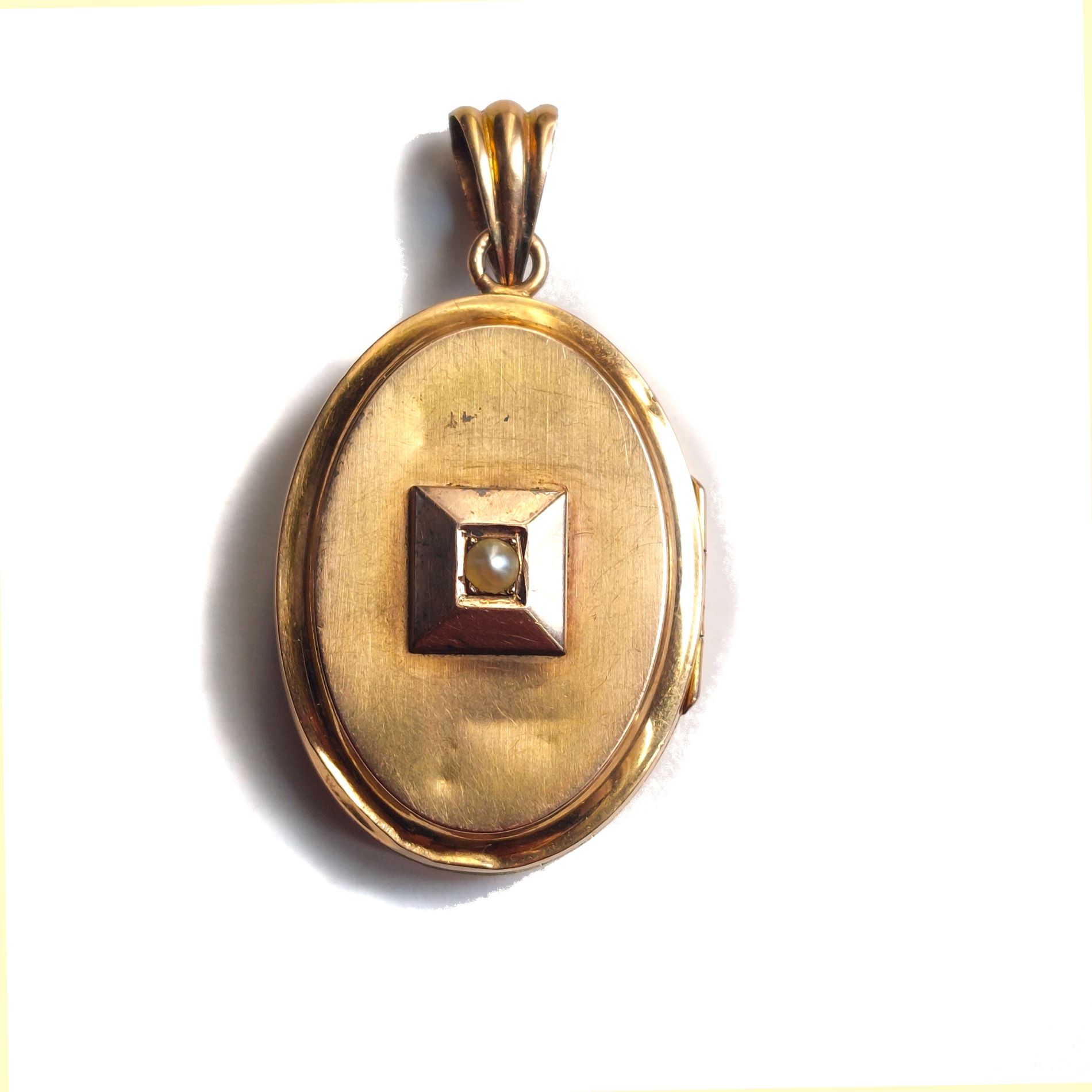
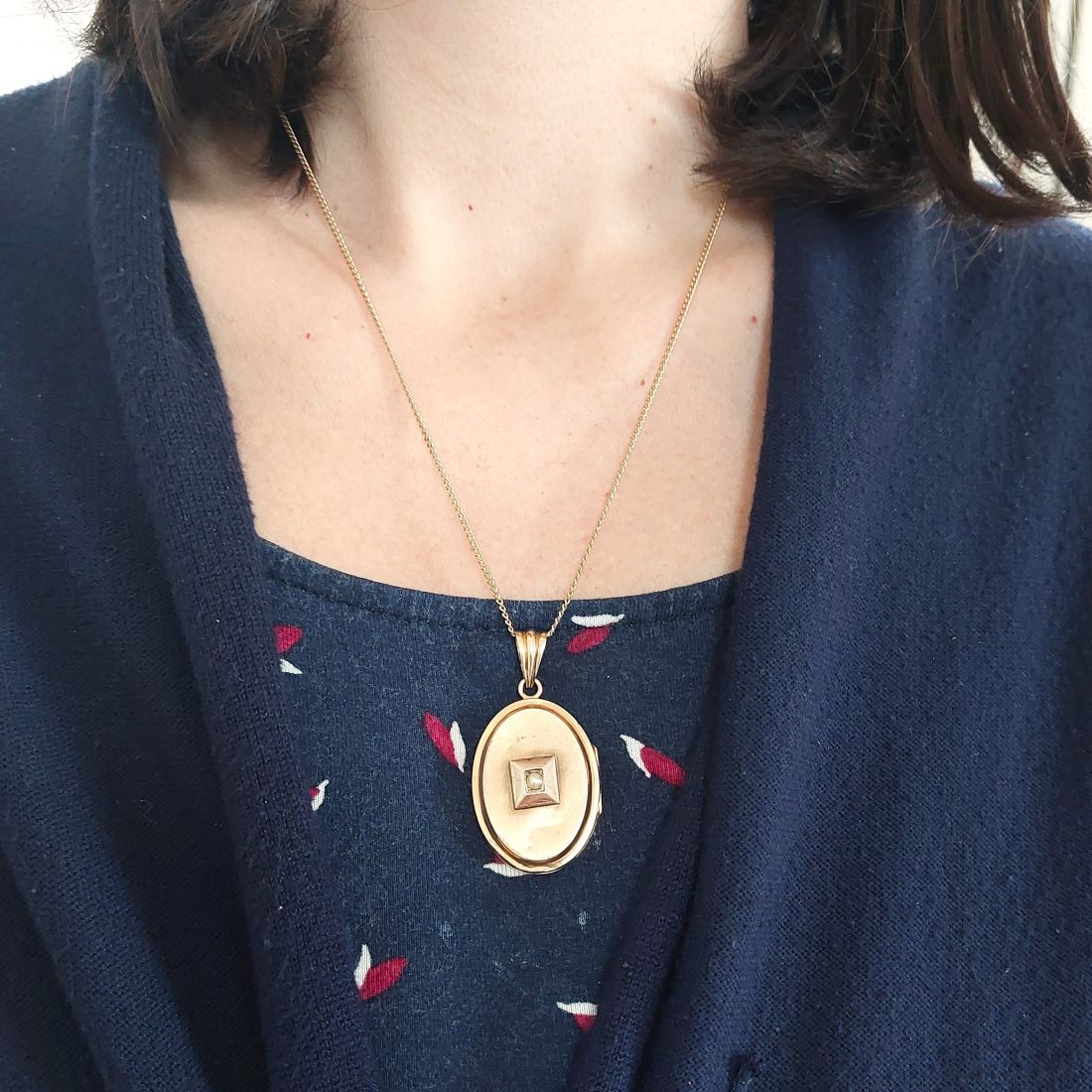
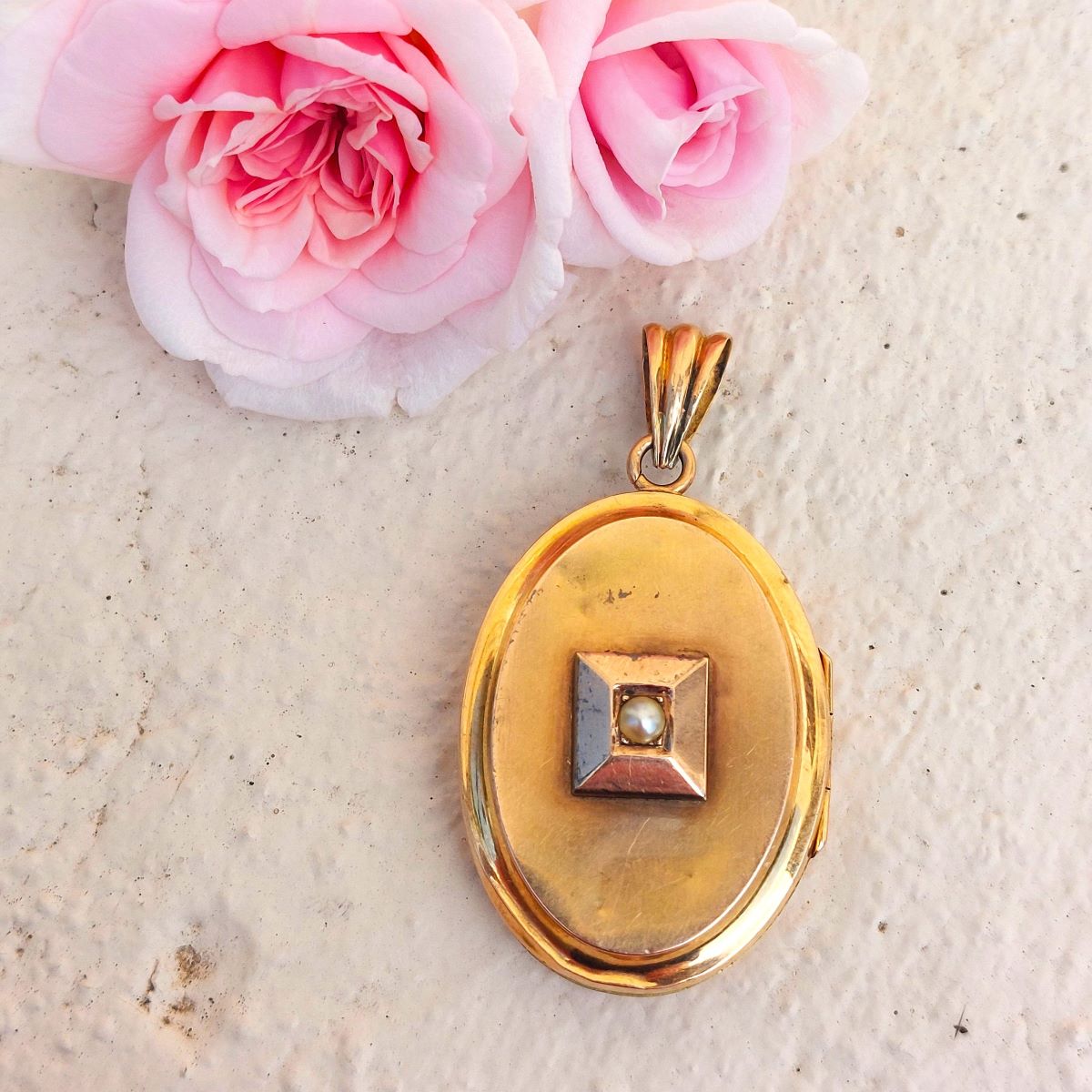
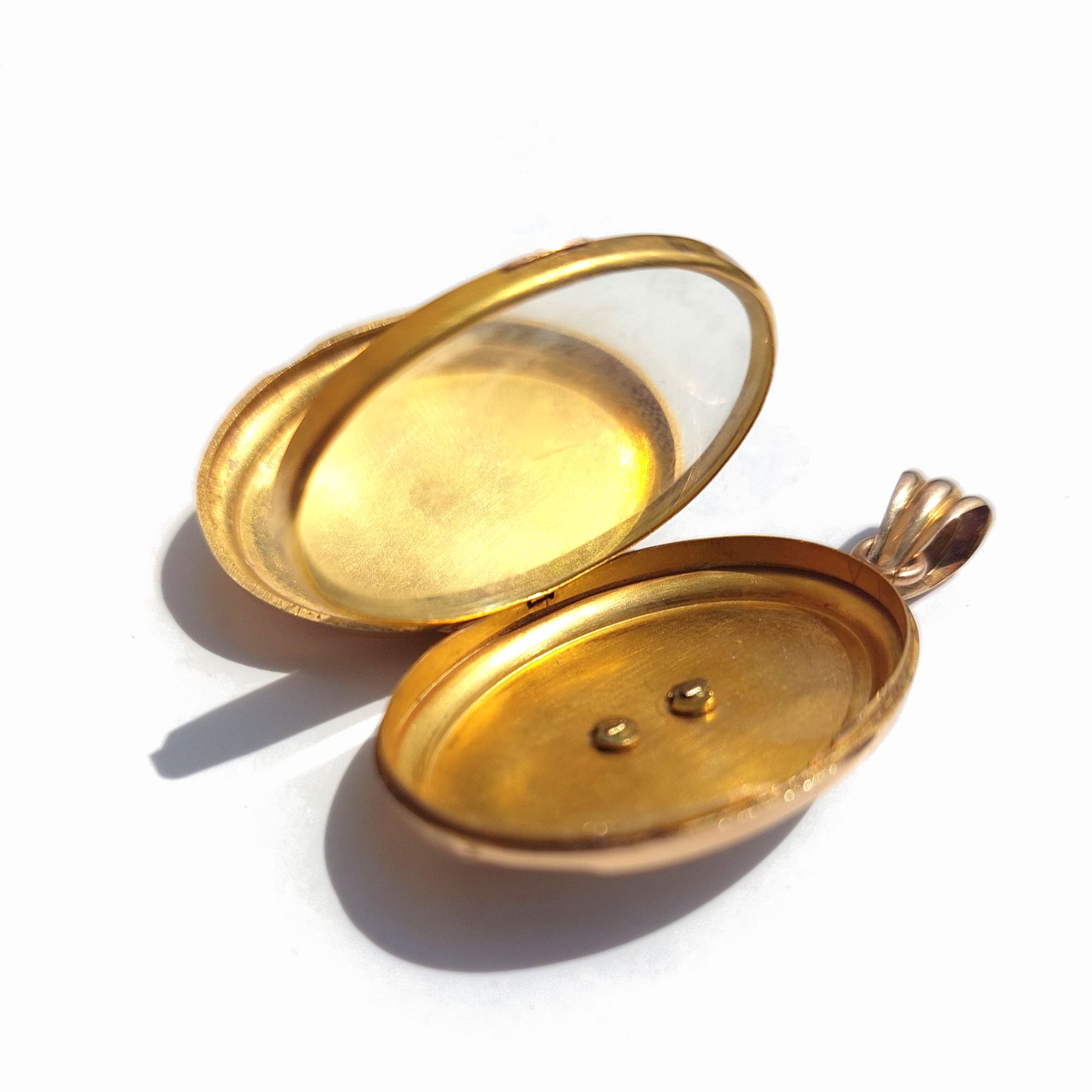
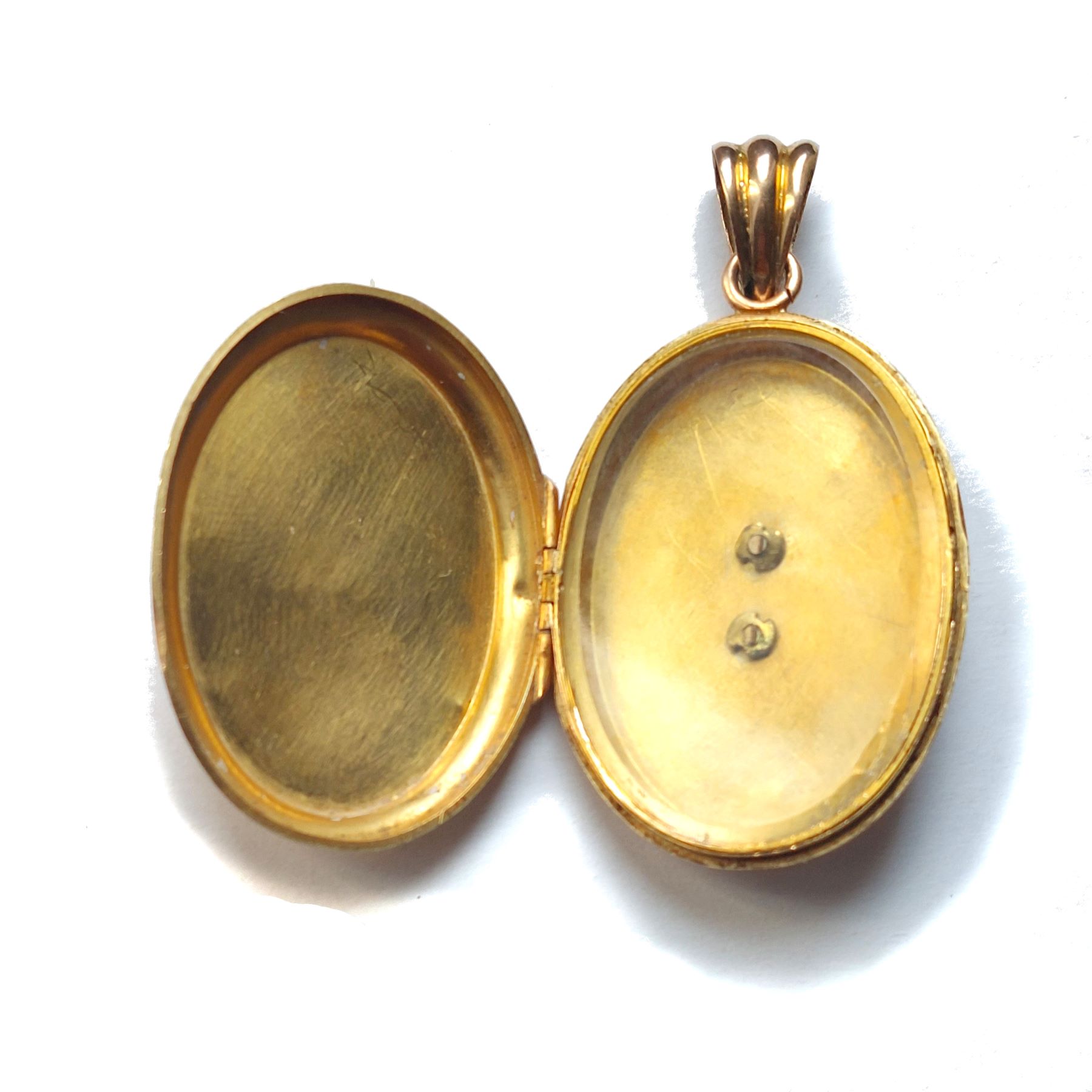
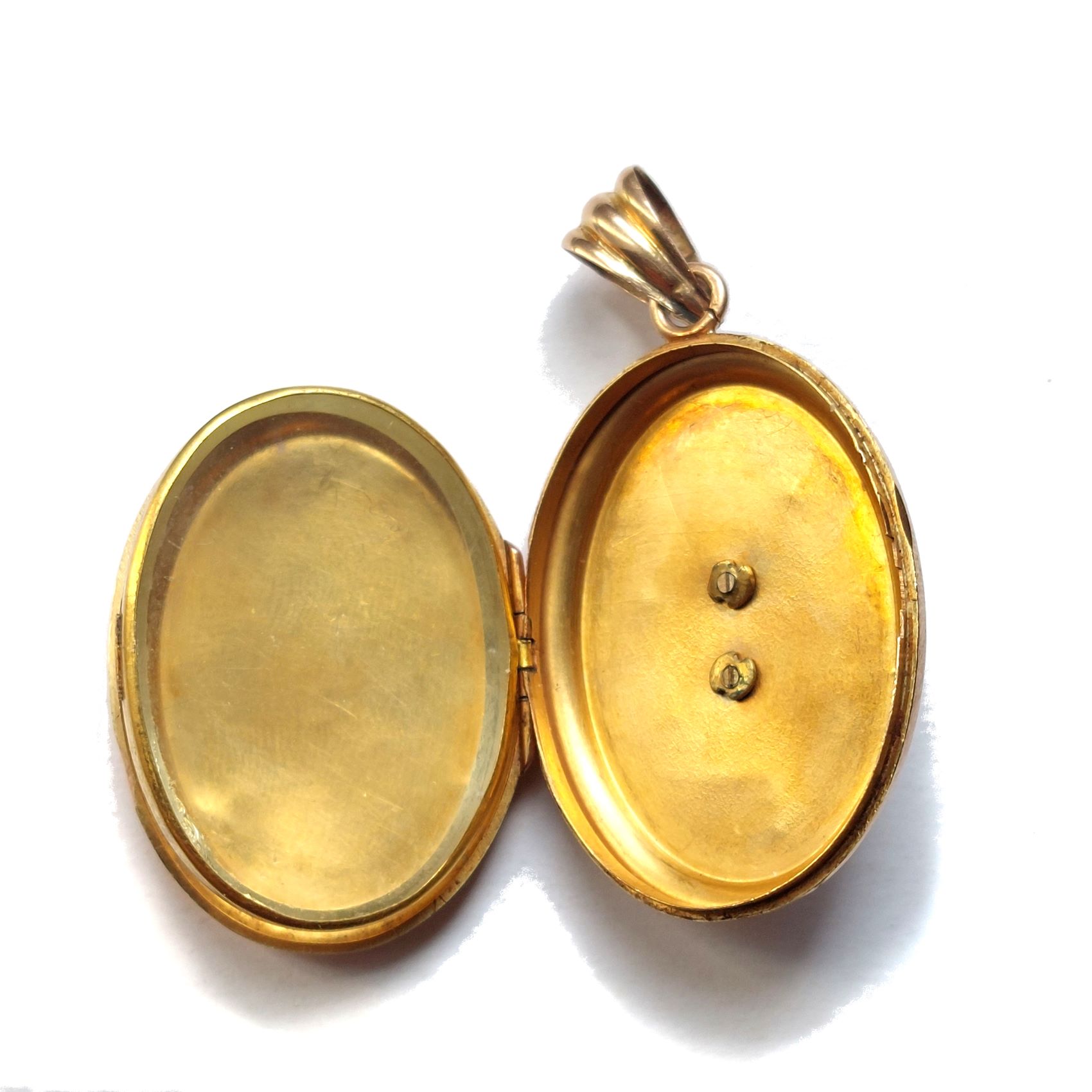
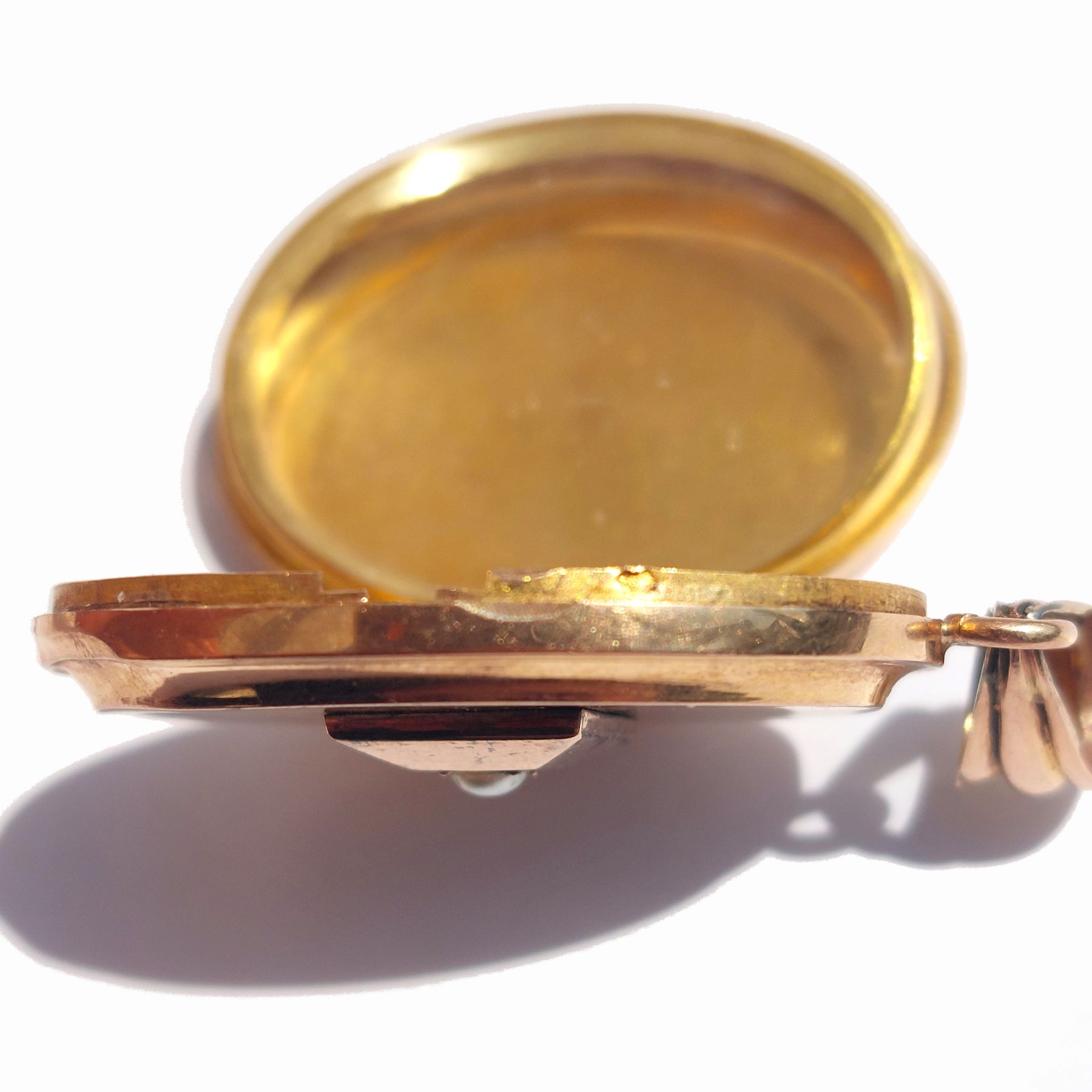
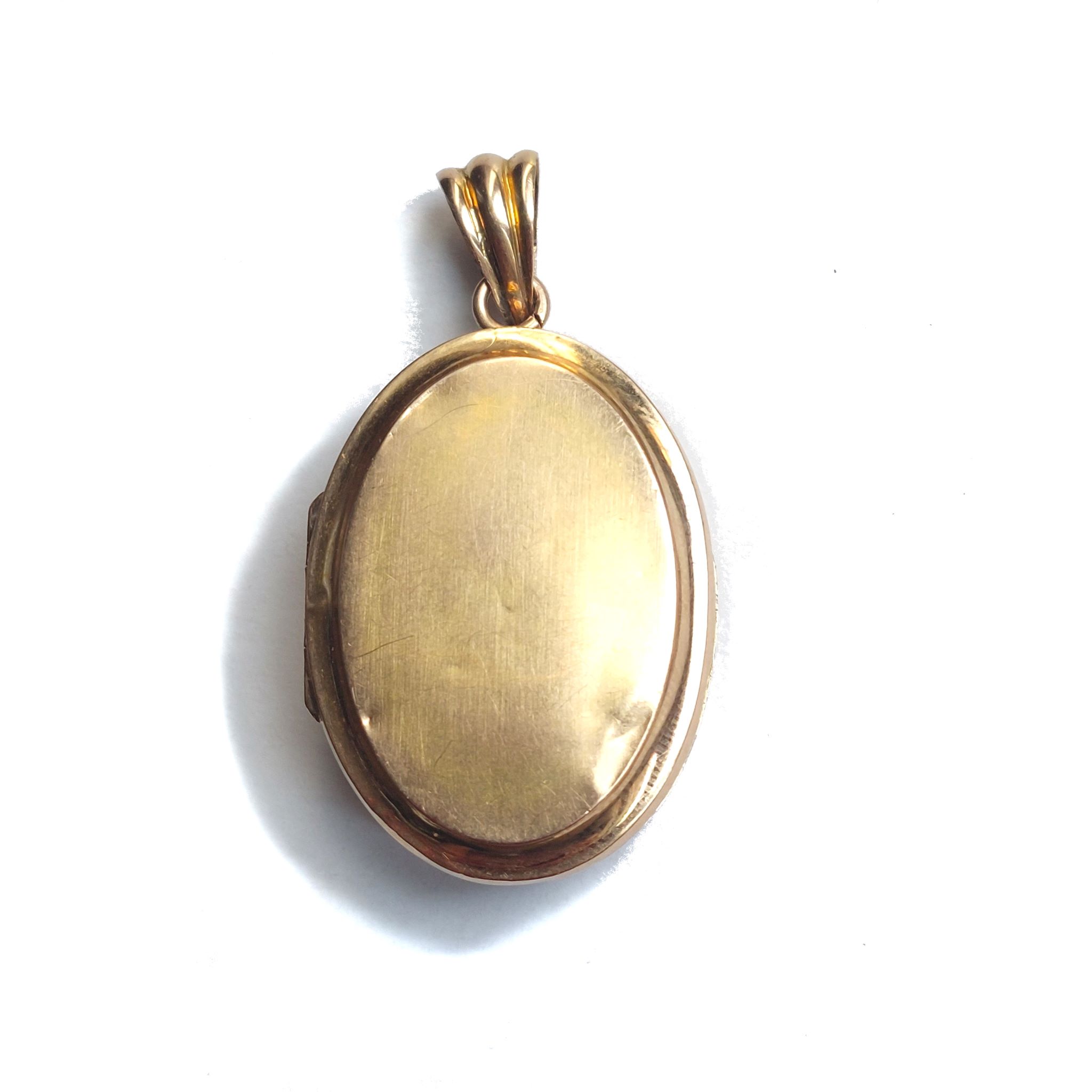
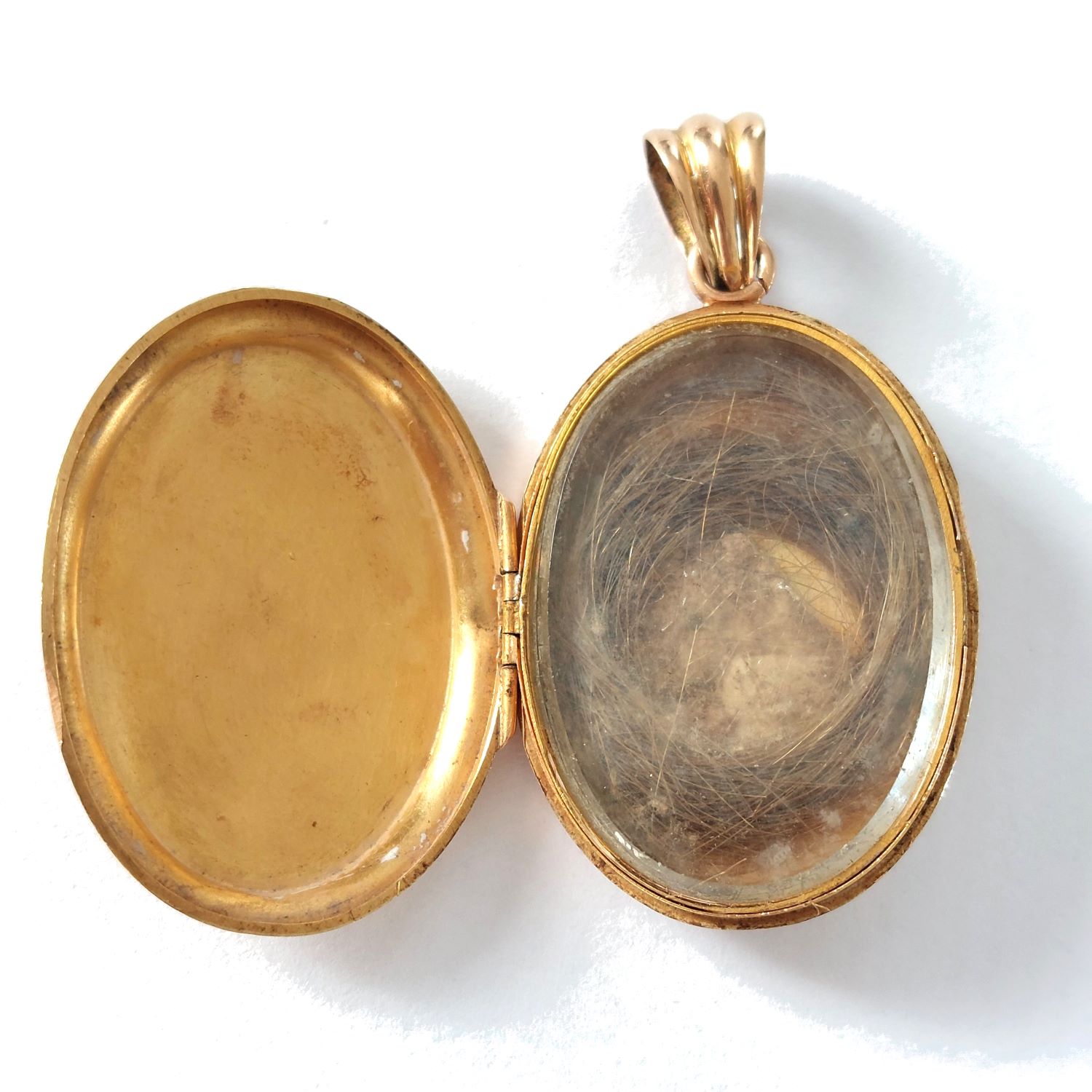
Pendentif médaillon porte-souvenir de forme ovale en or jaune 18k, à charnière et fermoir, ouvrant sur un compartiment vitré destiné à recevoir un souvenir personnel — photographie, mèche de cheveux, miniature. La face antérieure est ornée d’un carré biseauté en or rose retenant une perle centrale. La bélière, en or jaune godronné, est d’un galbe soigné. L’ensemble présente deux tons d’or distincts, l’alliance du jaune et du rose étant caractéristique du goût joaillier de la seconde moitié du XIXe siècle.
Travail français, seconde moitié du XIXe siècle. Trace de poinçon de maître relevée sur la bélière.
Authenticité & Garantie
- Pièce unique, sélectionnée par la Maison ACDLR
- Bijou authentifié et expertisé par nos soins
- Paiement sécurisé par virement, CB, Paypal (possibilité en plusieurs fois)
- Certificat d’authenticité fourni
- Livraison sécurisée et assurée, gratuite vers la France, la Belgique et Monaco
Pendentif médaillon porte-souvenir XIXe siècle, or 18k et perle
Pendentif médaillon porte-souvenir de forme ovale en or jaune 18k, à charnière et fermoir, ouvrant sur un compartiment vitré destiné à recevoir un souvenir personnel — photographie, mèche de cheveux, miniature. La face antérieure est ornée d’un carré biseauté en or rose retenant une perle centrale. La bélière, en or jaune godronné, est d’un galbe soigné. L’ensemble présente deux tons d’or distincts, l’alliance du jaune et du rose étant caractéristique du goût joaillier de la seconde moitié du XIXe siècle.
Travail français, seconde moitié du XIXe siècle. Trace de poinçon de maître relevée sur la bélière.
Caractéristiques
Hauteur totale avec bélière : 4,3 cm environ
Dimensions du médaillon : 3,1 × 2,4 cm environ
Poids brut : 12,2 g (verre intérieur inclus)
Métal : or 18k – 750/1000
Poinçons : tête d’aigle (bordure interne) ; trace de poinçon de maître (bélière)
Fermeture : à pression, charnière à droite (ouverture par le côté gauche)
État
Pendentif médaillon porte-souvenir en bon état général pour une pièce de cet âge. Quelques légères traces d’enfoncement en surface et rayures sur le verre intérieur — signes d’un usage réel et d’une vie portée, non d’une négligence. De légères traces d’oxydation, localisées sur et autour de l’or rose : phénomène attendu et cohérent, le cuivre plus présent dans cet alliage étant naturellement plus sensible à l’oxydation.
À noter : la charnière est positionnée à droite, entraînant une ouverture par le côté gauche — disposition peu commune, qui témoigne d’une fabrication artisanale individualisée plutôt que d’une production en série.
Lorsque le médaillon nous est parvenu, il contenait encore une mèche de cheveux blonds et la photographie très ancienne d’un jeune enfant. La pièce n’avait manifestement pas été ouverte depuis plusieurs décennies.
Histoire & Style
Le bijou de sentiment connaît son apogée dans la seconde moitié du XIXe siècle, porté par un mouvement plus large qui traverse l’Europe : le culte de la mémoire affective. Dans une époque où la photographie naissante commence à fixer les visages, où la mortalité infantile reste élevée et les séparations fréquentes, garder sur soi l’image ou la trace physique d’un être cher prend une valeur quasi rituelle.
Le médaillon porte-souvenir en est l’objet emblématique : il se glisse dans l’encolure, disparaît sous le vêtement, n’appartient qu’à celle qui le porte. Ni bijou d’apparat, ni simple parure — un objet privé, chargé.
La présence simultanée de l’or jaune et de l’or rose répond à une esthétique très prisée sous le Second Empire et la Troisième République naissante, avant que le platine et l’or blanc ne s’imposent à l’époque Art Nouveau. L’association d’une perle — symbole de pureté et de souvenir dans la tradition joaillière — avec un médaillon à compartiment verre renforce la cohérence symbolique de la pièce.
Ce médaillon appartient à une famille d’objets que l’on retrouve dans les collections de bijoux d’affection des musées d’Arts Décoratifs, du Victoria & Albert Museum ou du Musée d’Orsay. Sa lisibilité stylistique, sa facture soignée et son contenu d’origine en font une pièce à la fois documentée et émouvante.
| Poids | 12,2 g |
|---|---|
| Catégories | Pendentifs |
| Métal | Or jaune, Or rose |
| Epoque | 19ème siècle |
| Pierres | Perle |
English
19th-Century Souvenir Locket Pendant, 18k Gold and Pearl
Oval locket pendant in 18k yellow gold, with hinge and press clasp, opening to reveal a glazed compartment designed to hold a personal keepsake — a photograph, lock of hair, or miniature portrait. The front face is set with a bevelled square of rose gold retaining a central pearl. The bail, in reeded yellow gold, is neatly shaped. The piece presents two distinct gold tones, the combination of yellow and rose gold being characteristic of the jeweller’s taste of the second half of the 19th century.
French work, second half of the 19th century. Partial maker’s mark visible on the bail.
Specifications
Total height with bail: approx. 4.3 cm
Locket dimensions: approx. 3.1 × 2.4 cm
Gross weight: 12.2 g (including interior glass)
Metal: 18k gold – 750/1000
Hallmarks: eagle’s head (inner rim); partial maker’s mark (bail)
Clasp: press closure, hinge on the right (opens from the left side)
Condition
Good overall condition for a piece of this age. A few light surface dents and minor scratches to the interior glass — signs of genuine wear and a life actually worn, not of neglect. Light oxidation marks localised on and around the rose gold: an expected and consistent phenomenon, as the higher copper content of this alloy makes it naturally more susceptible to oxidation. Worth noting: the hinge is positioned on the right, causing the locket to open from the left — an uncommon arrangement, suggesting individual hand-craftsmanship rather than serial production.
When the locket came to us, it still contained a lock of blonde hair and a very old photograph of a young child. The piece had clearly not been opened for several decades.
History & Style
The sentimental jewel reached its height in the second half of the 19th century, carried by a broader movement across Europe: the cult of affective memory. In an era when nascent photography was beginning to fix faces, when infant mortality remained high and separations frequent, keeping the image or physical trace of a loved one close took on a near-ritual significance.
The souvenir locket is its emblematic object: it slips beneath the neckline, disappears under clothing, belongs only to the one who wears it. Neither display jewellery nor mere ornament — a private object, laden with meaning.
The simultaneous presence of yellow and rose gold reflects an aesthetic widely favoured under the Second Empire and the early Third Republic, before platinum and white gold came to dominate the Art Nouveau period. The pairing of a pearl — symbol of purity and remembrance in the jeweller’s tradition — with a glazed-compartment locket reinforces the symbolic coherence of the piece.
This locket belongs to a family of objects found in the sentimental jewellery collections of the Musée des Arts Décoratifs, the Victoria & Albert Museum, and the Musée d’Orsay. Its stylistic legibility, careful craftsmanship, and original contents make it a piece that is at once historically grounded and genuinely moving.
Avis
Il n’y a pas encore d’avis.